
GTA: Vice City - Definitive
Rockstar GamesAction
3.8316.00 Reviews
- Version
- 1.90.0
- Installs
- 5.00M
- Age Rating
- Mature 17+
Screenshots

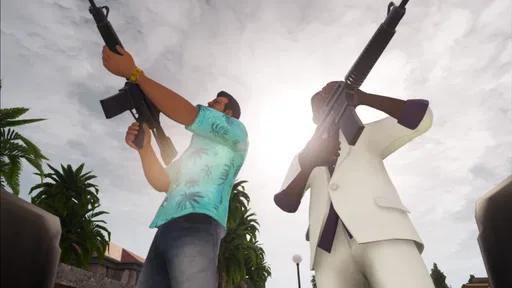

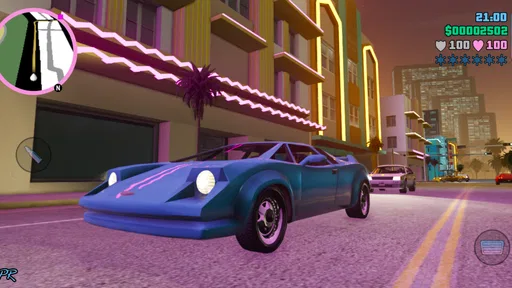
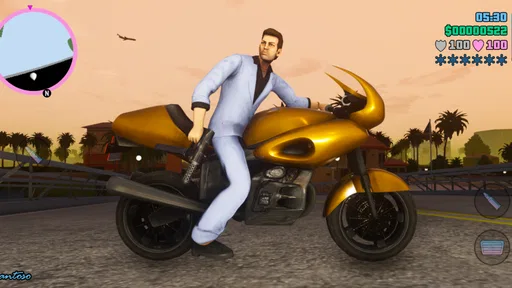

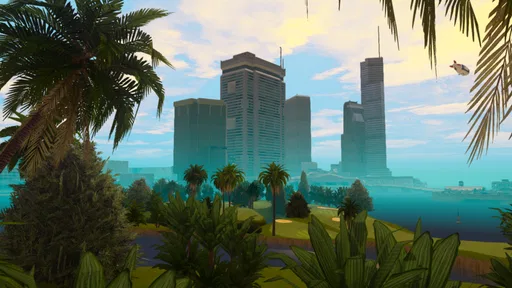
Our Review of GTA: Vice City - Definitive
 Analysis by Appyee
I spent time with GTA: Vice City - Definitive as a modern way to revisit Rockstar Games’ neon-soaked action game, and the feature that shaped my experience most was its ability to bring a large, story-driven crime world to a mobile screen. That sounds simple, but it changes how I use the game: I can play a substantial single-player adventure in short sessions, then return later without needing a television or console in front of me.
This is a free game in the action category, aimed at a mature audience of 17 and over. It has attracted more than five million installs and sits at a 3.7 average from roughly seventeen thousand ratings, so the reception is clearly mixed rather than universally enthusiastic. That feels fair to me. The game still has a strong setting, memorable missions and a distinct personality, but bringing an older open-world design to mobile also exposes some rough edges that are easier to forgive on a larger platform.
Why the mobile version works best as a portable story game
The central capability here is not merely driving around a digital city. It is the combination of an open map, a continuing narrative and the freedom to decide how much of the world I want to tackle during each session. I can follow the main storyline, wander through Vice City, take on optional activities or simply explore the streets when I do not want to commit to a long mission.
That flexibility is especially valuable on a phone or tablet. A short break can be enough for a little exploration, while a longer evening gives the story room to develop. I do not have to treat every launch as a serious gaming appointment. The structure lets me move between focused missions and casual driving, which is why the game feels more substantial than a typical mobile action title built around quick, disconnected rounds.
The setting remains the biggest reason to play. Vice City’s bright colors, exaggerated characters and period atmosphere give the adventure a clear identity. Even when the underlying mission design shows its age, the world has a mood that many newer mobile games lack. I found myself remembering locations by their visual character rather than by a bland list of map markers.
The real strength is continuity: the city, the story and the player’s freedom all support one another instead of feeling like separate modes.
What that capability changes during ordinary play
In practice, I approach the game differently from a conventional mobile action title. I am not constantly waiting for energy, chasing a rotating event or repeating a tiny level for a reward. The open-world format gives me more control over the rhythm. If a mission becomes frustrating, I can step away from it and spend time learning the roads, experimenting with vehicles or simply moving through the city.
That freedom also makes the game more demanding of the player’s attention. There is less hand-holding than in many contemporary mobile releases. I have to remember where I am, understand what a mission is asking and manage movement, camera control and combat without expecting every action to be perfectly automated. For me, that creates a satisfying sense of ownership, but it can feel awkward if I am used to games designed primarily around touchscreens.
The current version is 1.90.0, and the game requires an operating system at least as new as version 11. Those requirements matter before downloading: an older device may not be eligible, while a compatible device can still vary considerably in comfort depending on screen size and control layout. I would much rather play on a larger phone or tablet than on a small display, because the extra room makes driving, aiming and reading the action easier.
Touch controls are the first practical hurdle
Driving is usually the more approachable part of the mobile experience. Steering, acceleration and braking can be learned quickly, and cruising around the city is often enjoyable in its own right. Combat asks more from me. When several things happen at once, virtual buttons and camera movement can compete for attention. I occasionally find myself concentrating more on positioning my fingers than on the scene itself.
My best adjustment was to avoid treating the default layout as sacred. I use a lighter touch, keep the camera under control before entering a confrontation and give myself more space on the screen whenever possible. Players who rush directly into fights may blame the game for every missed action, but some of the problem is the natural friction of touch input. A controller-compatible setup, where available on the player’s device, would be preferable for anyone who already dislikes virtual controls, though the game is still designed to be played on a mobile device.
Another useful habit is to separate travel from mission pressure. I take a moment to learn the route before starting an objective when the destination is unfamiliar. This reduces the feeling of being thrown into a chase or confrontation while I am still fighting the camera. It is a small change, but it makes the open-world design feel more deliberate and less chaotic.
A realistic session: short break or full evening
Imagine having half an hour before leaving home. I can load the game, drive across Vice City, explore a nearby area and make progress without needing to finish an entire story arc. If I have an uninterrupted evening, I can instead follow several objectives and become more invested in the characters and the wider conflict. That range is one of the most convincing reasons to keep the game installed.
The same flexibility helps during travel or while waiting between appointments, provided the device is suitable and the player is comfortable with the controls. I would not recommend beginning a difficult mission when I have only a few minutes, because touch mistakes and interruptions can quickly turn a promising attempt into irritation. Free exploration is a better fit for fragmented time; story missions deserve a calmer session.
This is also where the game differs from many free action alternatives. It does not feel built around a stream of tiny challenges that exist mainly to keep me checking in. The experience is closer to carrying an older console-style adventure in my pocket. That is a meaningful advantage for players who want a world to inhabit, not just a sequence of quick tasks.
Where it sits beside other mobile action games
Compared with competitive shooters, this game is slower, more personal and less dependent on other players. I do not need to coordinate with a team or worry about a live match ending while I am interrupted. Compared with endless runners or arcade driving games, it offers more context and a stronger sense of place. Compared with newer open-world games, however, its older design can feel less polished in movement, mission logic and touch interaction.
That comparison helps clarify the audience. If I want immediate action with clean controls and short rounds, another mobile game may be a better choice. If I want a recognizable crime story, a colorful city and the ability to roam at my own pace, this version has a more distinctive appeal. Its age is both the reason it remains memorable and the reason some players will find it less comfortable than newer alternatives.
The cost question and the mature audience
The game is listed as free, with in-app purchases priced at $19.99 per item. That makes the initial decision easy: I can try the experience without paying upfront. At the same time, I would inspect the purchase screen carefully before committing to anything, especially if I am handing the device to a younger family member. The mature 17+ rating is not decorative; the tone, themes and violence make this unsuitable for children.
For me, the free entry point is useful because the game’s appeal depends heavily on personal tolerance for older controls and presentation. I would rather test it on my own device than assume the name alone guarantees a perfect mobile experience. The rating and age guidance also mean parents should not treat it as a general family game simply because it runs on a phone.
Tradeoffs that become clearer after extended play
The largest tradeoff is convenience versus precision. A portable open-world game is wonderfully accessible, but a touchscreen cannot always provide the same confidence as physical controls. Driving around is forgiving; fast combat and complicated movement are less so. Players with larger screens or a comfortable external control setup are likely to have an easier time than those using a compact phone with crowded controls.
The second tradeoff is freedom versus direction. I enjoy being able to ignore the main path for a while, yet that freedom can also make the next useful activity less obvious. Someone who prefers a tightly guided campaign may find the city distracting. I recommend accepting that the game sometimes expects curiosity rather than constant instruction.
The third tradeoff is atmosphere versus modern smoothness. Vice City has a strong visual and musical personality, and that personality carries the experience. Still, the underlying design belongs to an earlier generation of open-world games. Some missions can feel repetitive, and certain interactions lack the refinement I expect from a game created specifically for current mobile hardware. I see that as a limitation to weigh honestly, not a reason to dismiss the entire package.
There is also a practical question of device suitability. The minimum operating-system requirement is 11, so anyone using an older phone should check compatibility before planning around the game. On a supported device, I would still close unnecessary background apps, keep the screen clean and play with enough battery available for a longer session. Those are ordinary precautions, but they matter more when the game’s appeal depends on sustained immersion.
Small habits that improve the experience
I found three habits especially useful. First, I use free-roaming time to learn the city rather than treating travel as dead space. Recognizing major routes makes later objectives less stressful and lets me focus on the mission instead of staring at the map.
Second, I reserve difficult objectives for sessions when I can concentrate. The game is much more enjoyable when I am not trying to squeeze a demanding chase into a rushed break. Short sessions still work, but exploration and simple movement are better choices when time is limited.
Third, I judge the game by its complete rhythm rather than by the first few minutes. The appeal grows when the setting, characters and open structure have time to connect. If the initial touch controls feel unfamiliar, I would give myself a little time to adjust the layout and camera habits before deciding whether the whole experience works for me.
These are not magic fixes. They cannot turn an older control scheme into a modern one, but they do reveal the game’s intended strengths. The more I treated the phone as a window into a persistent city rather than as a conventional quick-play app, the more satisfying the experience became.
Who gets the most from this version
I think this is best for players who value atmosphere, story and freedom over the newest graphics or the cleanest touch controls. It is a particularly good fit for someone who remembers the original style of open-world crime games and wants a portable way to revisit that formula. It also suits newcomers who are curious about the roots of the genre, provided they are willing to accept some older design habits.
It is less suitable for children because of the mature rating, and I would also steer away anyone who wants a purely casual game with instant, effortless controls. Players who mainly enjoy online competition may find the solitary structure too quiet, while people with very little patience for virtual buttons may prefer a different action title or a platform with physical controls.
The rating of 3.7 from around seventeen thousand ratings reflects that divide well: there is a real audience for the setting and scale, but the mobile conversion will not satisfy everyone equally. I would not read that average as a verdict on the story alone. It says more about the combination of an older game, modern expectations and the practical challenge of playing an open-world action title by touch.
My final recommendation
After playing it, I see GTA: Vice City - Definitive as a worthwhile portable adventure with a very specific appeal. Its best feature is the way it lets me carry a recognizable, story-led open world into ordinary gaps in the day. I can explore casually, return to the narrative when I have time and enjoy a setting that still feels more individual than many interchangeable mobile action games.
I would recommend trying it if you have a supported device, enjoy single-player action and are comfortable giving older controls a fair chance. I would skip it if your priority is competitive play, flawless touch precision or a completely modern mission structure. The free price makes experimentation reasonable, while the $19.99 in-app purchase price per item means I would make any later spending decision carefully.
In my view, GTA: Vice City - Definitive succeeds when treated as a portable piece of open-world history rather than as a brand-new mobile system. It is colorful, flexible and full of character, but it asks the player to meet it halfway. If you do, the result is a surprisingly convenient way to spend a short break or a full evening in Vice City; if you do not, the touchscreen friction and dated design may outweigh the nostalgia and freedom.
Privacy and Permissions
See what permissions an app requests and how it handles your data.
- Wi-Fi connection information
- view Wi-Fi connections
- Other
- view network connections, measure app storage space, full network access, change your audio settings, run at startup, control vibration, prevent device from sleeping, Google Play license check
Verdict
Strengths of GTA: Vice City - Definitive
- Faithful recreation of Vice City’s iconic 1980s atmosphere
- Large open world with plenty of missions and side activities
- Improved character models and lighting over the original release
- Full controller support makes driving and shooting more comfortable
- Story progression is easy to follow for newcomers to the series
Limitations of GTA: Vice City - Definitive
- Touchscreen controls can feel awkward during intense firefights
- Performance may vary noticeably across older mobile devices
- Some visual effects look dated beside newer open-world games
- The download requires substantial storage space
- Occasional bugs can interrupt missions or affect character animations
Other Releases by Rockstar Games
View All
GTA: Liberty City Stories
Adventure4.0

Grand Theft Auto: San Andreas
Action4.5

Bully: Anniversary Edition
Action4.0

Grand Theft Auto: Vice City
Arcade3.3
Similar Picks in This Category
View All
Temple Run 2: Endless Escape
Imangi Studios4.1

PUBG MOBILE
Level Infinite4.3

Free Fire: 9th Anniversary
GARENA INTERNATIONAL I4.4

Talking Tom: Hero Dash Run
Outfit7 Limited4.3

slither.io
Lowtech Studios3.9

Sniper 3D:Gun Shooting Games
Wildlife Studios4.6
Frequently Asked Questions
What is GTA: Vice City – Definitive Edition?
GTA: Vice City – Definitive Edition is a remastered version of Rockstar Games’ classic open-world action game. It follows Tommy Vercetti as he builds a criminal empire in a colorful 1980s-inspired city. The Definitive Edition features updated visuals, improved controls, refreshed character models, and modernized gameplay while preserving the original story, missions, radio stations, and free-roaming experience.
Can GTA: Vice City – Definitive Edition be played offline?
Yes, the game is primarily designed as a single-player experience and most of the campaign can be played offline after the required files have been downloaded and the game has been properly activated. An internet connection may still be needed for installation, account verification, updates, or restoring access. It is recommended to launch the game once online before playing without an internet connection.
What devices are compatible with the mobile version?
Compatibility depends on your Android or iOS device, operating system version, available storage, and hardware performance. Although the game is optimized for mobile platforms, older phones and tablets may experience reduced frame rates, longer loading times, or graphical issues. Before downloading, check the official store listing for supported operating systems and device requirements, and ensure you have additional free storage for updates.
Does the game include the original story and music?
The Definitive Edition retains the main Vice City storyline, missions, characters, weapons, vehicles, and open-world structure that made the original popular. Its radio stations and music are also an important part of the experience, although licensing changes can affect which songs are included in particular releases. The remaster adds presentation and control improvements rather than replacing the original campaign with a new story.
Is GTA: Vice City – Definitive Edition suitable for children?
No. This is a mature-rated game containing violence, criminal themes, strong language, drug references, sexual content, and other adult situations. Players take part in organized crime, shootouts, car theft, and missions involving morally inappropriate behavior. Parents should review the rating in their country and consider using device-level parental controls, especially if the game will be installed on a child’s phone or tablet.
Play our best games!


